Home >> Resources >> Technical Articles
How to Choose the Right Aerogel Powder Based on Particle Size, Hydrophobicity, Density, Dispersion and Application Requirements
Silica aerogel powder is used as a functional material in thermal insulation coatings, lightweight composites, building materials, adhesives, sealants, industrial insulation systems and other advanced formulations.
However, aerogel powders are not interchangeable.
Two products may both be described as "hydrophobic silica aerogel powder" while having substantially different particle-size distributions, bulk densities, surface characteristics, moisture resistance, thermal properties and processing behavior.
Selecting an aerogel powder only by its room-temperature thermal conductivity may result in poor dispersion, excessive viscosity, weak mechanical properties, surface defects, particle breakage or inconsistent finished-product performance.
A reliable selection process should evaluate the complete relationship between:
Application requirements
Particle size and particle-size distribution
Hydrophobic or hydrophilic surface characteristics
Bulk and tapped density
Thermal conductivity
Porosity and specific surface area
Binder compatibility
Mixing and dispersion method
Target aerogel loading
Coating or composite thickness
Finished-product testing
Storage and handling requirements
This guide explains how to select an appropriate silica aerogel powder for different coating, composite and thermal insulation applications.
| Application | Aerogel Powder Type to Evaluate | Main Selection Focus |
|---|---|---|
| Ultra-thin thermal insulation coatings | Ultra-Fine Hydrophobic Aerogel Powder (AIRG-9010M, D90 ≤10 μm) | Surface finish, dispersion and ultra-thin film thickness |
| Thin thermal insulation coatings | Extra-Fine or Fine Hydrophobic Aerogel Powder (AIRG-9015M, D90 10–15 μm / AIRG-9030M, D90 25–30 μm) | Surface finish, dispersion and film thickness |
| Thick industrial insulation coatings | Medium or Coarse Hydrophobic Aerogel Powder (AIRG-9050M, D90 40–50 μm / AIRG-9080M, D90 60–80 μm) | Aerogel loading, viscosity and thermal performance |
| Water-based coatings | Surface-treated Hydrophobic Powder (AIRG-9015M / AIRG-9030M) with validated compatibility | Wetting, dispersion and formulation stability |
| Solvent-based coatings | Hydrophobic Powder compatible with binder/solvent (AIRG-9050M) | Dispersion stability and solvent interaction |
| Polymer composites | Fine-to-Medium Aerogel Powder (AIRG-9030M / AIRG-9050M) | Resin compatibility, particle integrity and mechanical properties |
| Adhesives and sealants | Ultra-Fine to Extra-Fine Aerogel Powder (AIRG-9010M / AIRG-9015M) | Rheology, uniformity and bond performance |
| Cementitious materials | Application-tested Aerogel Powder (AIRG-9080M, D90 60–80 μm) | Mixing stability, water demand and mechanical strength |
| Lightweight panels | Low-density Aerogel Powder or Particles (AIRG-9010M / AIRG-9080M) | Filling efficiency, density and structural performance |
| Loose-fill insulation | Low-density Powder or Granules (AIRG-9080M) | Flowability, containment and dust control |
| Functional masterbatches | Fine, controlled particle-size Powder (AIRG-9030M) | Processing temperature, dispersion and concentration consistency |
| General-purpose insulation | Omnitherm Silica Aerogel Powder (Omnitherm) | Balanced performance across multiple applications |
This table is intended for preliminary screening only. Final selection should use product-specific technical data, formulation trials and finished-system testing.
Silica aerogel has a nanoporous structure, high porosity, low density and low thermal conductivity. Airgeltech's current technical overview lists aerogel powder with thermal conductivity of no more than approximately 0.018 W/m·K, a specific surface area of approximately 600–800 m²/g and porosity of approximately 90–95%, while noting that particle size can be customized.
Aerogel powder can reduce heat transfer when it is successfully incorporated into a compatible coating or composite system. However, the thermal conductivity of the powder itself is not the same as the thermal conductivity of the finished product.
Finished-system performance may be affected by:
Aerogel loading
Binder thermal conductivity
Air content
Particle breakage
Dispersion quality
Coating thickness
Curing conditions
Moisture
Density
Compression
Other fillers and additives
The low apparent density of aerogel powder can support the development of lightweight insulation products and composites. Actual density reduction depends on the aerogel content, particle integrity, resin or binder density, processing method and finished-product structure.
Aerogel's porous structure contributes to its thermal insulation behavior. But high porosity can also create formulation challenges, including:
High liquid absorption
Rapid viscosity increase
Difficult wetting
Air entrapment
Particle damage under high shear
Increased binder demand
Hydrophobic silica aerogel powders are frequently considered for coatings, composites and insulation materials exposed to humidity or moisture. Hydrophobicity can help limit liquid-water interaction, but it does not make the complete formulation waterproof.
Water resistance still depends on binder selection, film formation, porosity of the finished coating, surface defects, joint design, substrate preparation, curing, weathering resistance and complete-system testing.
Silica aerogel powder is a particulate form of silica aerogel consisting of highly porous particles or aggregates. Depending on the manufacturing and post-processing method, an aerogel powder may be fine powder, medium-grade powder, coarse powder, irregular particles, controlled-size aggregates, granular aerogel, hydrophobic, hydrophilic, surface modified or unmodified.
The primary nanoscale structure should not be confused with the particle-size distribution measured for the supplied powder. Buyers should confirm whether a supplier's particle-size value refers to primary particle size, aggregate size, agglomerate size, D10, D50, D90, nominal range or sieve size.
Aerogel powder and aerogel particles are both porous silica-based materials, but they differ in particle size, handling characteristics, and typical applications.
Aerogel powder is usually selected for coatings, adhesives, sealants, and composite formulations where uniform dispersion is required.
Aerogel particles are often used in lightweight panels, glazing systems, insulation fills, daylighting materials, and structural applications where larger particle size and reduced dust generation are advantageous.
| Factor | Aerogel Powder | Aerogel Particles |
|---|---|---|
| Typical particle size | Fine to medium (micron-scale) | Larger (millimeter-scale or granular) |
| Dust generation | Higher | Lower |
| Dispersion requirement | High — uniform dispersion critical | Lower — easier handling |
| Typical applications | Coatings, adhesives, sealants, composites | Panels, glazing, loose-fill insulation, daylighting |
| Processing | Requires controlled mixing and dispersion | Easier to handle and fill |
| Surface finish | Can be smooth depending on grade | Not suitable for thin films |
| Filling efficiency | Moderate | High |
| Flowability | Lower | Higher |
Particle size influences surface smoothness, coating thickness, dispersion behavior, sedimentation, dust generation, rheology, filling efficiency, mechanical properties and processing method. A single average number does not fully describe particle-size behavior. Whenever possible, request D10, D50 and D90.
Hydrophobicity is particularly important for waterborne coatings, exterior building materials, humid environments, industrial insulation systems and moisture-sensitive composites. However, strong hydrophobicity may make initial wetting and dispersion in water-based formulations more difficult.
A water-based binder does not automatically require hydrophilic aerogel. Hydrophobic powder may still be used, but the formulation may require an appropriate dispersant, wetting agent, processing sequence or pre-dispersion method.
Bulk density affects packaging volume, transportation efficiency, powder feeding, filling capacity, final composite density and volumetric dosing accuracy. Tapped density gives additional information about how the material settles under vibration or handling.
Thermal conductivity data should only be compared when the test conditions are understood. Confirm test method, mean temperature, sample density, moisture condition, compression condition, test atmosphere, and whether the value applies to loose powder or a finished composite.
Specific surface area can influence liquid demand, binder interaction, adsorption, rheology, dispersant demand, surface modification and formulation stability. A higher specific surface area is not automatically better.
Purity may be important for electronics, battery systems, optical systems, sensitive polymers, high-temperature processing and regulated applications. Buyers should confirm SiO₂ content, residual solvents, surface-treatment chemistry, chloride content where relevant, metal impurities where relevant, volatile content, moisture content and applicable safety documentation.
Moisture can influence processing, storage stability and compatibility with moisture-sensitive binders. Moisture content is not the same as hydrophobicity. A hydrophobic powder may still contain measurable moisture depending on manufacturing, packaging and storage conditions.
Typical D90: ≤10 μm
Bulk density: 25–35 kg/m³
Tapped density: 35–50 kg/m³
Surface chemistry: Hydrophobic
May be considered where ultra-thin coatings are required, maximum surface smoothness is needed, lightweighting is a priority, precision dispersion is critical, and battery thermal barriers or specialty adhesives are involved.
Potential challenges include highest dust generation, highest viscosity increase, highest dispersant demand, greatest agglomeration tendency and highest cost.
Typical D90: 10–15 μm
Bulk density: 35–45 kg/m³
Tapped density: 45–60 kg/m³
Surface chemistry: Hydrophobic
May be considered where thin coatings with high surface quality are required, decorative insulation coatings are involved, precision adhesives and sealants are needed, and a balance between surface smoothness and processability is desired.
Typical D90: 25–30 μm
Bulk density: 40–50 kg/m³
Tapped density: 50–65 kg/m³
Surface chemistry: Hydrophobic
May be considered where standard thin insulation coatings are required, adhesives and sealants need uniform rheology, precision composite formulations are involved, and functional masterbatches are produced.
Typical D90: 40–50 μm
Bulk density: 60–80 kg/m³
Tapped density: 70–90 kg/m³
Surface chemistry: Hydrophobic
May be considered where industrial insulation coatings are required, composite materials need functional filling, construction materials require thermal insulation, and general-purpose insulation systems are developed.
Typical D90: 60–80 μm
Bulk density: 70–90 kg/m³
Tapped density: 80–110 kg/m³
Surface chemistry: Hydrophobic
May be considered where thick insulation coatings are required, functional mortars and cementitious systems are involved, high-build systems need high filling efficiency, and lightweight panels and bulk composite filling are produced.
Potential limitations include rougher finished surfaces, unsuitability for thin films, greater settling risk in some systems, and reduced uniformity in precision applications.
Hydrophobic aerogel powder is often selected for exterior coatings, industrial insulation coatings, humid-service materials, polymer composites, moisture-resistant panels, adhesives and sealants. Advantages may include reduced interaction with liquid water and improved moisture resistance at the material level. However, hydrophobic powder may be more difficult to wet in waterborne systems.
Hydrophilic aerogel may be considered for specialized applications where water interaction, adsorption or specific surface chemistry is required. It may be easier to introduce into some aqueous systems, but the final moisture sensitivity and durability must be evaluated.
Do not select only according to whether the formulation is water based or solvent based. Instead, assess binder chemistry, wetting method, dispersant system, mixing equipment, addition sequence, moisture exposure, storage stability, final water resistance and finished-system performance.
Define the Application — thermal insulation coating, polymer composite, adhesive, sealant, cementitious material, lightweight panel, masterbatch, loose-fill insulation, textile or nonwoven system, battery thermal-management material.
Define the Performance Objective — lower thermal conductivity, reduced density, improved moisture resistance, reduced insulation thickness, flame-performance support, improved thermal-barrier performance, lightweighting, functional adsorption, combined thermal and mechanical performance.
Determine Particle-Size Requirements — film thickness, surface-finish requirement, processing equipment, gap size, sedimentation risk, powder feeding, target aerogel loading.
Select Surface Characteristics — hydrophobic powder, hydrophilic powder, surface-modified powder, application-specific treatment.
Evaluate Formulation Compatibility — waterborne binders, solvent-based binders, epoxy, acrylic, silicone, polyurethane, cementitious matrices, adhesive systems, polymer masterbatches.
Plan the Mixing Method — addition sequence, pre-wetting procedure, mixing speed, shear level, mixing duration, defoaming method, temperature, dispersion additives.
Produce Laboratory Samples — start with controlled laboratory trials.
Validate the Finished System — thermal conductivity, density, viscosity, storage stability, surface quality, adhesion, mechanical strength, water resistance, fire performance, aging behavior.
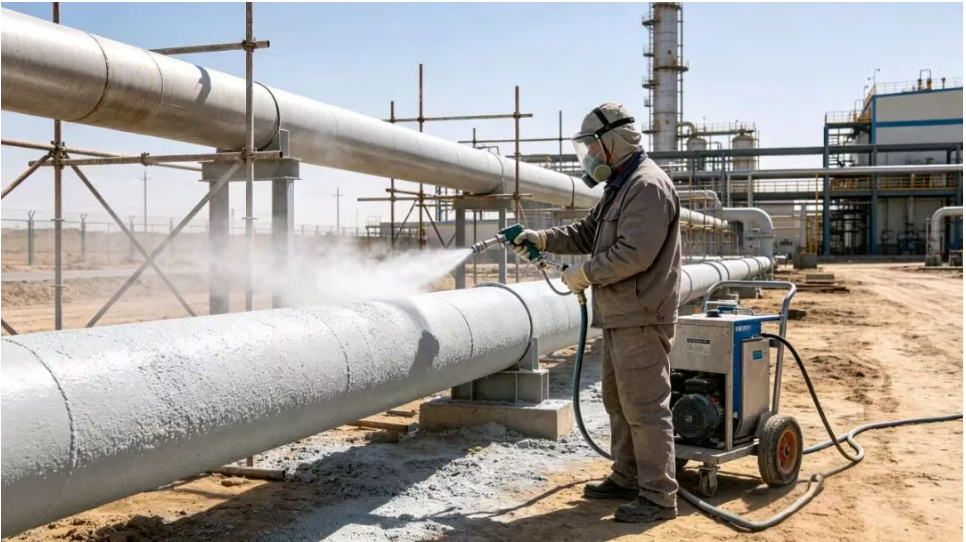
Aerogel powder can be used as a functional thermal filler in industrial and building coating formulations. Typical applications include industrial pipelines, storage tanks, equipment, interior walls, exterior walls, roofs, HVAC systems, anti-condensation coatings and thermal bridge treatment.
Important selection factors include dry-film thickness, particle-size distribution, aerogel loading, hydrophobicity, binder compatibility, viscosity, sag resistance, application method, spray-nozzle size, surface finish, adhesion, water resistance and thermal conductivity of the cured coating.
One of the main formulation challenges is introducing strongly hydrophobic aerogel into an aqueous system. Important factors include wetting-agent selection, dispersant selection, binder compatibility, addition sequence, foam generation, shear sensitivity, viscosity development and storage stability.
Excessive shear may damage the aerogel particle structure, while insufficient mixing may leave visible agglomerates. A controlled pre-dispersion process may be evaluated before the aerogel is introduced into the complete formulation.
Solvent-based systems may offer different wetting behavior, but compatibility must still be validated. Evaluate solvent polarity, binder chemistry, surface treatment, aerogel swelling or adsorption behavior, viscosity, sedimentation, drying, film defects and workplace handling requirements.
Aerogel powder may be evaluated as a lightweight, thermally insulating filler in epoxy systems, silicone systems, polyurethane, thermoplastics, thermoset composites, sandwich-panel cores and syntactic materials. Important criteria include resin compatibility, processing temperature, mixing shear, particle breakage, interfacial bonding, composite density, mechanical strength, thermal conductivity, moisture behavior and fire requirements.
Fine aerogel powder may be evaluated where uniformity, rheology and thin bond lines are important. Selection should consider particle size, viscosity, extrusion, sag resistance, cure behavior, adhesion, flexibility, cohesive strength, thermal cycling and moisture resistance. The aerogel should not prevent proper substrate wetting or interfere with curing.
Aerogel powder may be evaluated in thermal insulation mortar, plaster, render, lightweight concrete, prefabricated insulation panels and repair materials. Important criteria include water demand, mixing damage, cement compatibility, workability, density, compressive strength, shrinkage, moisture behavior, fire performance and thermal conductivity.
A highly porous powder may increase water or admixture demand. The formulation should therefore be optimized as a complete cementitious system.
For lightweight panels and structural insulation products, the main selection factors may include low bulk density, filling efficiency, particle-size distribution, binder demand, mechanical integrity, dust containment, panel density, dimensional stability and thermal conductivity. The lowest-density powder is not automatically the best choice if it causes handling, filling or bonding problems.
Yes. Silica aerogel powder is frequently evaluated as a thermal insulation additive in insulation mortars, thermal plasters, renders, lightweight concrete systems, and energy-efficient building materials.
However, aerogel powder can significantly influence water demand, density, workability, shrinkage behavior, mechanical strength and thermal conductivity. For this reason, the formulation should be optimized as a complete mortar system rather than by simply replacing a conventional filler.
Hydrophobic aerogel powder can be incorporated into water-based coatings when an appropriate formulation strategy is used. Important factors include wetting-agent selection, dispersant compatibility, mixing sequence, shear intensity, processing temperature and defoaming control.
Many formulators use a controlled pre-dispersion process before introducing the aerogel into the complete coating system. Excessive shear may damage the porous particle structure, while insufficient mixing can result in agglomeration and reduced coating performance.
A common purchasing mistake is choosing the supplier reporting the lowest thermal-conductivity number. This approach may be unreliable because the values may have been measured under different conditions.
Before comparing results, confirm test method, test temperature, mean temperature, sample form, sample density, compression, moisture condition, loose powder or compacted sample, aerogel powder or finished composite, and laboratory reference value or specification limit.
Selecting by particle size alone — smaller particles may increase viscosity, dust and liquid demand; larger particles may not suit thin coatings.
Selecting by thermal conductivity alone — material-level thermal conductivity does not guarantee finished-system performance.
Ignoring particle-size distribution — two powders with the same D50 may have very different D90 values.
Treating hydrophobicity as complete waterproofing — hydrophobic powder does not automatically make the final system waterproof.
Using excessive mixing shear — high shear may break the porous particle structure.
Increasing aerogel loading without system optimization — higher addition may create excessive viscosity, poor adhesion, cracking, reduced mechanical strength, poor film formation, difficult application and higher cost.
Skipping laboratory trials — supplier data cannot replace formulation-specific testing.
Before production-scale use, evaluate the aerogel powder in a controlled formulation program.
Material Verification — TDS, SDS, particle-size data, bulk and tapped density, thermal conductivity, hydrophobicity, moisture, purity, storage requirements.
Small-Scale Dispersion Trial — addition sequence, mixing speed, mixing time, temperature, wetting behavior, agglomeration, foam, viscosity.
Formulation Screening — compare multiple loading levels and, where appropriate, different particle-size grades.
Finished-Sample Testing — thermal conductivity, density, adhesion, compressive strength, flexural strength, tensile properties, water absorption, vapor behavior, fire performance, thermal cycling, freeze-thaw behavior, weathering, aging, storage stability.
Pilot Production — confirm that laboratory performance can be reproduced using production equipment.
| Requirement | Powder Characteristic to Evaluate |
|---|---|
| Smooth thin coating | Fine and controlled particle-size distribution |
| High-build insulation coating | Medium or coarse grade with stable high loading |
| Waterborne coating | Hydrophobicity plus validated wetting and dispersion |
| Exterior application | Hydrophobic powder plus complete weather-resistant system |
| Lightweight composite | Low bulk density and compatible particle structure |
| High mechanical performance | Optimized loading and strong matrix compatibility |
| Cementitious material | Controlled water demand and mechanical-property retention |
| Adhesive or sealant | Fine powder with stable rheology and bond performance |
| Bulk filling | Low density, flowability and dust containment |
| Precision formulation | Tight D10/D50/D90 control and batch consistency |
One of the most common questions from formulation engineers is: Should I use silica aerogel powder or hollow glass microspheres? Although both materials are frequently used in coatings, composites, adhesives, sealants and lightweight construction materials, they serve different engineering purposes and should not be considered direct substitutes.
Silica aerogel powder primarily functions as a nanoporous thermal insulation material. Hollow glass microspheres, by contrast, are lightweight spherical fillers containing an enclosed gas cavity. Their primary advantage is density reduction and volume filling rather than maximum thermal insulation.
| Selection Factor | Silica Aerogel Powder | Hollow Glass Microspheres |
|---|---|---|
| Thermal Insulation Performance | Excellent | Moderate |
| Density Reduction | Good | Excellent |
| Lightweight Filling | Good | Excellent |
| Thermal Conductivity Reduction | Excellent | Moderate |
| Compression Resistance | Moderate | Good |
| Coating Surface Smoothness | Depends on particle size | Usually good |
| Rheology Control | Moderate | Excellent |
| Volume Filling Efficiency | Moderate | Excellent |
| Cost Efficiency | Moderate | Usually better |
| High-Performance Insulation Systems | Excellent | Limited |
| Structural Lightweight Panels | Good | Excellent |
| Composite Mechanical Reinforcement | Limited | Moderate |
| High Aerogel Loading Applications | Excellent | Not applicable |
Particle size is one of the most important but most misunderstood parameters in aerogel powder selection. Many buyers assume smaller particles are always better. In reality, the most suitable particle size depends on the specific application, coating thickness, formulation method, processing equipment and performance objectives.
| Specification | AIRG-9080M | AIRG-9050M | AIRG-9030M | AIRG-9015M | AIRG-9010M | Test Method |
|---|---|---|---|---|---|---|
| Color | White powder | White powder | White powder | White powder | White powder | – |
| Thermal Conductivity [W·m⁻¹·K⁻¹] | <0.018 (25 °C) | <0.018 (25 °C) | <0.018 (25 °C) | <0.018 (25 °C) | <0.018 (25 °C) | ISO 22007-2 |
| BET Surface Area (m²/g) | 600–800 | 600–800 | 600–800 | 600–800 | 600–800 | GB/T 10722 |
| Tapped Density (kg/m³) | 80–110 | 70–90 | 50–65 | 45–60 | 35–50 | GB/T 21354 |
| Bulk Density (kg/m³) | 70–90 | 60–80 | 40–50 | 35–45 | 25–35 | GB/T 23771-2009 |
| Particle Size (D90, μm) | 60–80 | 40–50 | 25–30 | 10–15 | ≤10 | GB/T 19077 |
| Mean Pore Diameter (nm) | <30 | <30 | <30 | <30 | <30 | N₂ adsorption/desorption |
| Porosity (%) | 90–95 | 90–95 | 90–95 | 90–95 | 90–95 | Back-calculation of skeleton density |
| Chlorine & Sulfur Content (mg/kg) | Not detected | Not detected | Not detected | Not detected | Not detected | BS EN 14582-2016 |
| Surface Chemistry | Hydrophobic | Hydrophobic | Hydrophobic | Hydrophobic | Hydrophobic | – |
| Trend | AIRG-9010M | AIRG-9015M | AIRG-9030M | AIRG-9050M | AIRG-9080M |
|---|---|---|---|---|---|
| D90 (μm) | ≤10 | 10–15 | 25–30 | 40–50 | 60–80 |
| Bulk density (kg/m³) | 25–35 | 35–45 | 40–50 | 60–80 | 70–90 |
| Surface smoothness | Very high | High | Medium | Low | Very low |
| Viscosity increase | Very high | High | Medium | Low | Very low |
| Dispersion difficulty | Very high | High | Medium | Low | Very low |
| Filling efficiency | Low | Low | Low | Medium | High |
| Maximum loading | Low | Low | Low | Medium | High |
| Dust generation | Very high | High | Medium | Low | Very low |
| Lightweighting effect | Very high | High | Medium | Low | Very low |
Determine the target application.
Define acceptable coating or composite thickness.
Assess surface-finish requirements.
Evaluate processing and mixing equipment.
Estimate desired aerogel loading.
Validate through laboratory trials.
All five grades share the same thermal conductivity (<0.018 W/m·K), BET surface area (600–800 m²/g), mean pore diameter (<30 nm), porosity (90–95%) and hydrophobic surface chemistry. The main differences are particle size (D90), bulk density and tapped density. AIRG-9010M: D90 ≤10 μm, bulk density 25–35 kg/m³. AIRG-9015M: D90 10–15 μm, bulk density 35–45 kg/m³. AIRG-9030M: D90 25–30 μm, bulk density 40–50 kg/m³. AIRG-9050M: D90 40–50 μm, bulk density 60–80 kg/m³. AIRG-9080M: D90 60–80 μm, bulk density 70–90 kg/m³.
There is no single particle size suitable for all insulation coatings. Fine powders are generally easier to use in thin coatings requiring a smoother surface. Medium or coarse grades may be evaluated for high-build systems where higher loading and filling efficiency are more important.
No. Fine powder may improve surface smoothness but can increase viscosity, dust generation, dispersant demand and agglomeration risk. The correct grade depends on the final formulation.
Not necessarily. Hydrophobic aerogel powder can be used in water-based systems if the formulation and process provide adequate wetting and dispersion. The finished water resistance, formulation stability and thermal performance should be validated.
Usually not on a one-to-one basis. Aerogel powder has a much lower density and different surface and liquid-demand characteristics from many conventional fillers. The formulation may require changes to binder level, dispersant, thickener, defoamer, application method and mixing process.
They perform different functions and are not always direct substitutes. Aerogel powder is normally selected primarily for its nanoporous thermal-insulation structure, while hollow glass microspheres may provide lightweight filling, volume, flow and mechanical functions. Some formulations may use both materials to balance thermal insulation, density, mechanical properties, rheology and cost.
There is no universal addition ratio. The appropriate loading depends on binder system, particle size, bulk density, target thermal conductivity, viscosity limit, film thickness, mechanical requirements, application method and cost target. The percentage should be established through formulation trials and finished-product testing.
Aerogel powder alone does not establish the fire classification of a coating. Fire performance depends on the complete formulation, thickness, substrate and test method. Finished products should be tested according to the applicable standard.
Request, as applicable: Technical Data Sheet, Safety Data Sheet, particle-size distribution, thermal-conductivity data, bulk and tapped density, hydrophobicity data, moisture information, purity or composition data, test methods, batch consistency information and sample availability.
Yes. Silica aerogel powder is frequently evaluated as a thermal insulation additive in insulation mortars, thermal plasters, renders, lightweight concrete systems and energy-efficient building materials. However, it can significantly influence water demand, density, workability, shrinkage behavior, mechanical strength and thermal conductivity. The formulation should be optimized as a complete mortar system. Read the full section.
Hydrophobic aerogel powder can be incorporated into water-based coatings when an appropriate formulation strategy is used. Important factors include wetting-agent selection, dispersant compatibility, mixing sequence, shear intensity, processing temperature and defoaming control. Read the full section.
Aerogel powder is usually selected for coatings, adhesives, sealants and composite formulations where uniform dispersion is required. Aerogel particles are often used in lightweight panels, glazing systems, insulation fills, daylighting materials and structural applications. Read the full comparison.
The best silica aerogel powder is not necessarily the product with the finest particle size, the lowest published thermal conductivity, the highest porosity, the lowest density, the strongest hydrophobicity or the highest allowed loading. The best powder is the grade that can be processed consistently and delivers the required performance in the finished coating, composite or insulation system.
Ultra-thin coatings: prioritize AIRG-9010M (D90 ≤10 μm).
Thin coatings with high surface quality: evaluate AIRG-9015M (D90 10–15 μm).
Standard thin coatings, adhesives and sealants: evaluate AIRG-9030M (D90 25–30 μm).
High-build industrial insulation coatings and composites: evaluate AIRG-9050M (D90 40–50 μm) and AIRG-9080M (D90 60–80 μm).
Cementitious materials: pay particular attention to water demand, mixing damage, workability and strength — AIRG-9080M is often a practical starting point.
General-purpose or multi-application insulation: consider Omnitherm.
Any new formulation: compare multiple grades under the same laboratory conditions before finalizing the specification.
Silica aerogel powder can provide valuable thermal and lightweighting functions in coatings, composites, adhesives, building materials and industrial insulation products. However, successful application depends on much more than the thermal conductivity of the raw powder.
A reliable selection should consider application type, particle-size distribution, surface characteristics, hydrophobicity, bulk and tapped density, thermal conductivity, binder compatibility, mixing method, stable loading, processing conditions, finished-product properties and applicable testing requirements.
The central selection principle is:
Application requirements define the powder grade.
Particle size influences processing and surface quality.
Surface treatment influences wetting and moisture behavior.