Pipeline Insulation
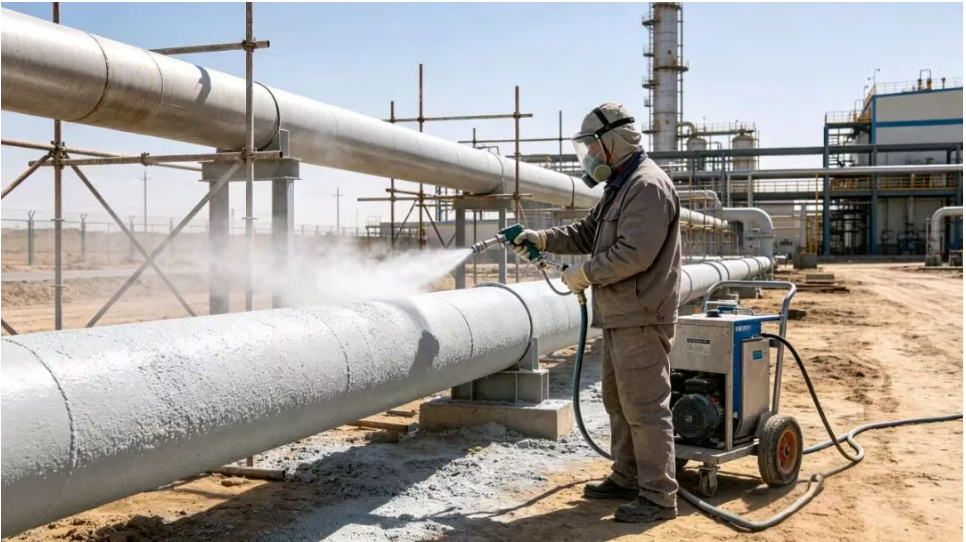
Reference applications for industrial pipeline insulation in medium- and high-temperature service conditions.
Typical: Steam pipelines, refinery lines, chemical processing lines

Home >> Case Studies
Explore application-based references for silica aerogel insulation materials across pipeline systems, equipment and tanks, high-temperature processes, cryogenic environments, and building insulation.
This section helps buyers, engineers, technical teams, and project evaluators understand where aerogel insulation is commonly used, which product forms may fit different thermal conditions, and how to continue technical evaluation through related resources.
Reference applications for industrial pipeline insulation in medium- and high-temperature service conditions.
Reference applications for process equipment and tank insulation where thermal stability and long-term performance are required.
Reference applications where space-saving thermal protection and stable performance under demanding conditions are critical.
Reference applications for cryogenic and LNG-related systems where minimizing cold loss is essential.
Reference applications where thin-profile, high-performance thermal materials are needed for limited spaces or retrofit projects.
These case references are designed to help technical buyers and international B2B users understand application fit, compare material forms, and move efficiently toward technical documents and product discussions.
Identify which insulation scenarios are most relevant to your systems and thermal conditions.
Understand which aerogel forms suit pipelines, equipment, cryogenic systems, or building applications.
Move from application understanding to validation through TDS, test reports, and SDS.
Reduce uncertainty with use-case-oriented references that show real-world value.
Fast answers about aerogel insulation applications, performance advantages, and product selection logic.
Aerogel insulation is widely used where high thermal performance and reduced insulation thickness are required.
It is commonly applied in industrial pipelines, process equipment, storage tanks, high-temperature systems, cryogenic environments, and building insulation. Aerogel materials help reduce heat or cold loss while minimizing insulation thickness, making them suitable for space-constrained systems.
Yes, aerogel insulation is commonly used in pipelines and tanks where thermal efficiency and reduced insulation thickness are critical.
It is suitable for steam pipelines, refinery systems, chemical processing lines, and insulated storage tanks. Compared to traditional insulation materials, aerogel can provide similar or improved thermal performance with a thinner profile.
Aerogel insulation can be used in cryogenic systems where minimizing cold loss is essential.
It is applicable in LNG pipelines, low-temperature tanks, and cryogenic processing systems. Performance should always be evaluated based on actual operating temperature, system design, and moisture conditions.
Aerogel insulation achieves high thermal performance due to its extremely low thermal conductivity.
This allows systems to meet insulation requirements with less thickness compared to many traditional materials. However, final efficiency depends on installation, system conditions, and operating temperature.
The correct product depends on application type, temperature range, and installation requirements.
Blanket, coating, mortar, powder, and granule forms are used for different scenarios. Selection typically starts with identifying the application, followed by reviewing product specifications and validating through technical data.
If you are evaluating silica aerogel insulation materials for industrial pipelines, equipment, high-temperature systems, cryogenic environments, or building insulation, Airgeltech can provide material-level technical support, product information, and related documentation for further review.