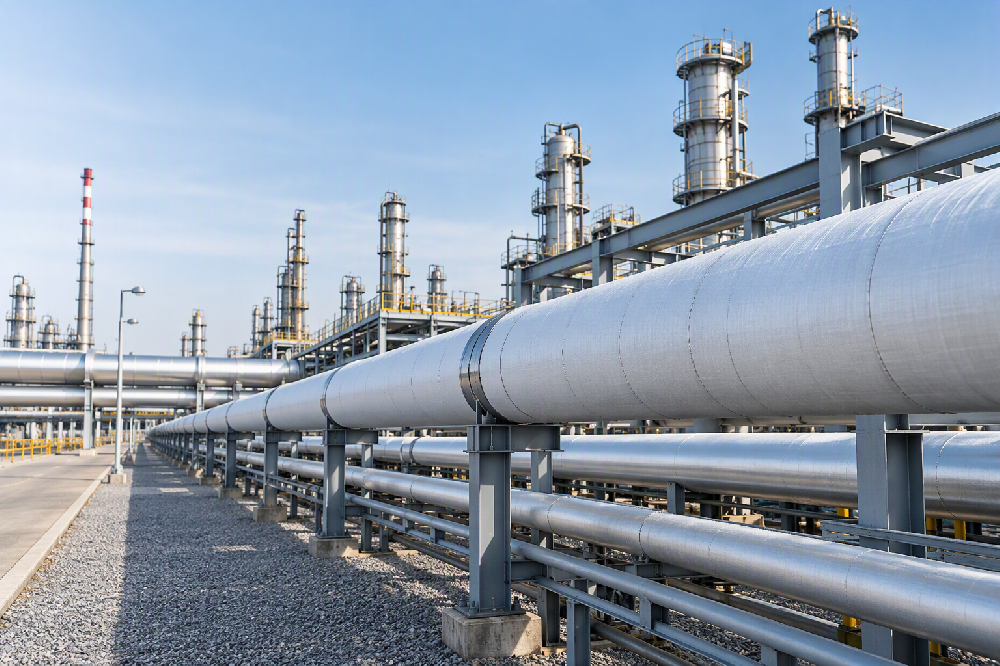
Industrial thermal insulation plays a critical role in energy efficiency, process stability, and operational safety within petrochemical facilities.
A large-scale petrochemical insulation retrofit project was recently completed as part of an ongoing energy optimization and facility modernization program. The project involved thermal insulation upgrades for high-temperature pipelines, steam turbines, valves, flanges, and complex process equipment operating under demanding industrial conditions.
Approximately 400 m³ of aerogel insulation materials were installed throughout the facility to replace aging conventional insulation systems and improve overall thermal performance.
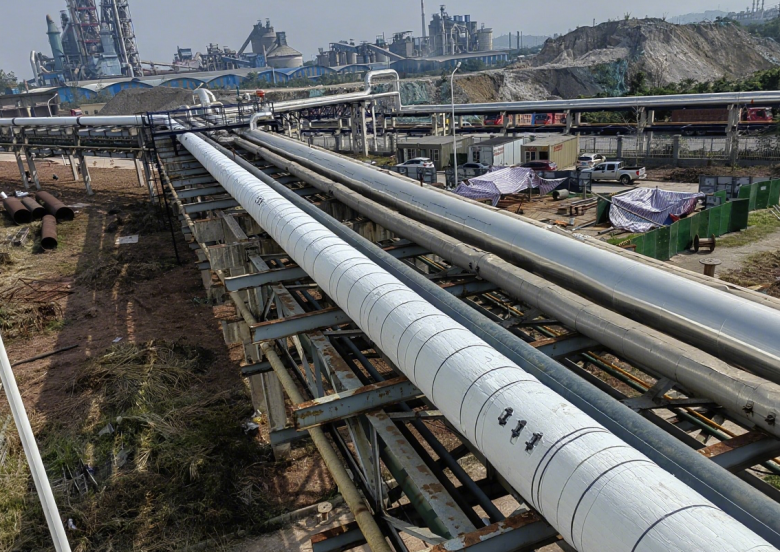
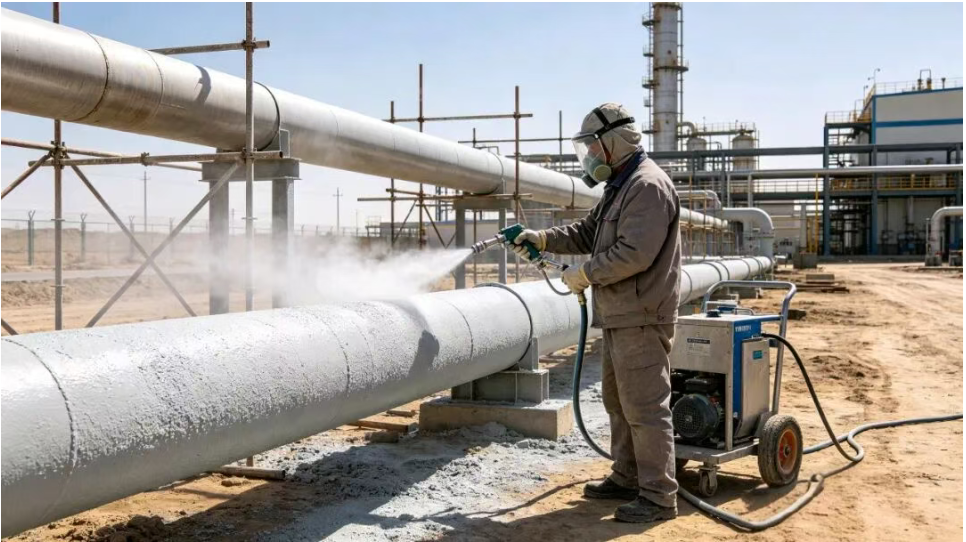
Large-scale aerogel insulated process pipelines in a petrochemical facility.
| Industry | Petrochemical |
| Insulation Material | Aerogel Blanket |
| Material Quantity | Approx. 400 m³ |
| Maximum Operating Temperature | 420°C |
| Installed Thickness | 40 mm |
| Heat Loss Reduction | >50% |
| Estimated Payback Period | ~3 Years |
Before the retrofit, the facility faced several common insulation challenges frequently encountered in petrochemical operations.
The original insulation system had been in service for many years. Over time, thermal performance declined due to:
As a result, heat loss increased and overall energy efficiency declined.
Many components within the facility featured complex shapes, including:
Traditional insulation materials often struggle to conform tightly to these structures, creating thermal bridges and localized heat-loss areas.
Process temperatures reached up to:
420°C
under continuous high-temperature operating conditions
The insulation system needed to maintain long-term performance under continuous high-temperature operating conditions.
Frequent equipment inspection and maintenance required insulation systems that could be removed and reinstalled efficiently without excessive material damage.
Following a detailed engineering evaluation, the project adopted a customized aerogel blanket insulation solution designed specifically for petrochemical operating conditions.
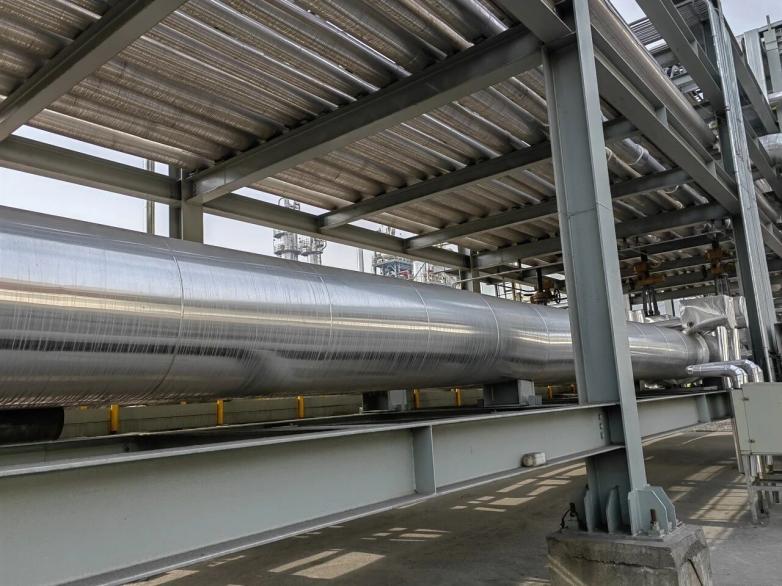
Aerogel blanket insulation applied to high-temperature industrial pipelines.
| Specification | Value |
|---|---|
| Insulation Material | Aerogel Blanket |
| Thermal Conductivity | Approx. 0.021 W/m·K |
| Maximum Service Temperature | Above 450°C |
| Installed Thickness | 40 mm |
| Traditional Insulation Thickness | Approx. 150 mm |
Compared with conventional insulation systems, the aerogel solution achieved similar or improved thermal performance with significantly reduced thickness.
To address the complex layout of the facility, several design improvements were implemented:
Following commissioning, operational performance demonstrated significant improvements across multiple areas.
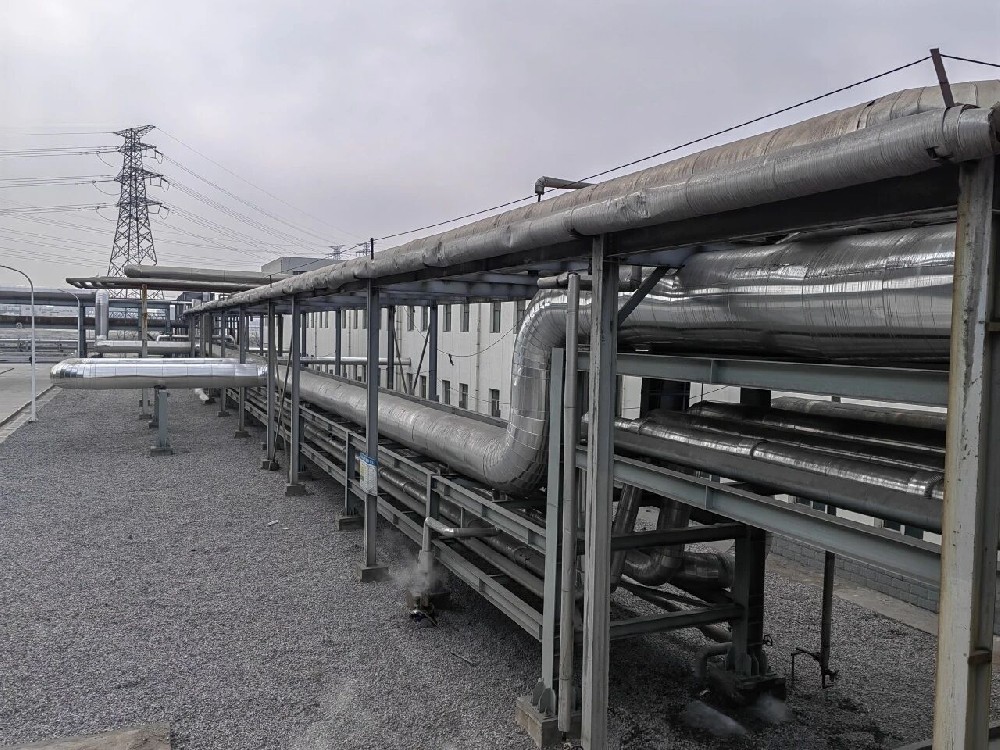
Completed aerogel insulation retrofit on industrial process pipelines.
> 50%
reduction in heat loss compared with the previous insulation system
1,956 tce
estimated annual energy savings in tons of standard coal equivalent
4,882 t
estimated annual reduction in CO₂ emissions
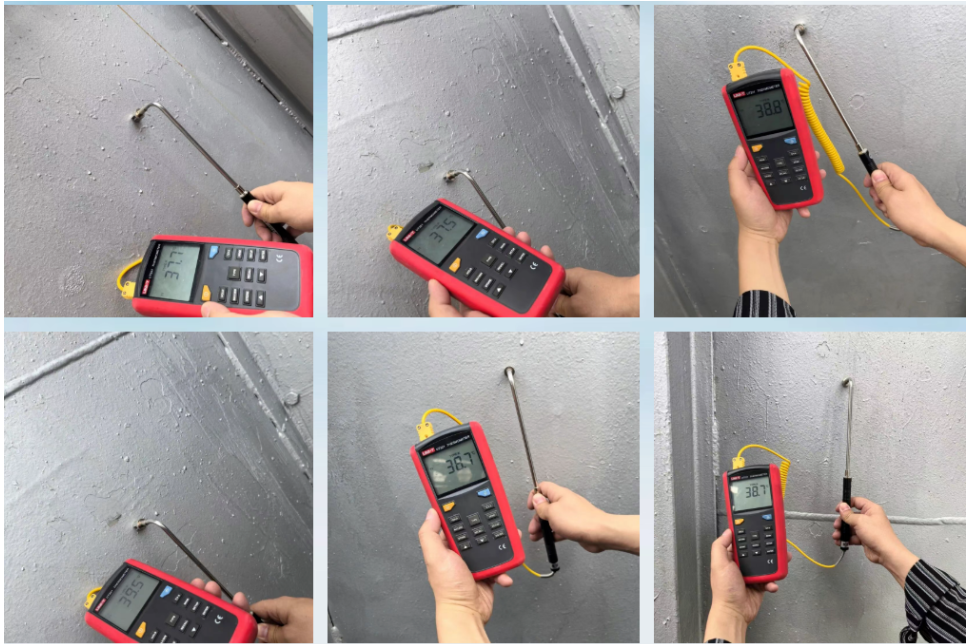
Thermal monitoring indicated that total heat loss was reduced by more than 50% compared with the previous insulation system. This improvement contributed directly to lower energy consumption and improved process efficiency.
Estimated annual energy savings reached approximately 1,956 tons of standard coal equivalent (tce). This reduction in energy consumption supports both operational cost optimization and sustainability objectives.
The improved insulation system contributed to an estimated annual reduction of 4,882 tons of CO₂ emissions, helping support long-term carbon reduction initiatives.
The removable insulation design reduced maintenance-related insulation removal and reinstallation time by more than 70% compared with conventional insulation methods.
Although aerogel insulation materials typically involve higher initial investment, the project demonstrated considerable long-term value through:
The estimated payback period was approximately 3 years, depending on operating conditions and energy costs.
Petrochemical facilities increasingly require insulation systems capable of delivering:
Aerogel blanket insulation is becoming an increasingly attractive solution because it combines ultra-low thermal conductivity with lightweight, flexible installation characteristics.
For facilities operating at elevated temperatures and seeking improved energy efficiency, aerogel technologies may offer a practical path toward long-term performance improvement.
This project demonstrates how advanced aerogel insulation materials can:
As industrial facilities continue pursuing energy-efficiency improvements, aerogel-based thermal insulation solutions are expected to play an increasingly important role in petrochemical and high-temperature industrial applications.
Explore additional technical resources related to industrial insulation, aerogel blanket applications, thermal management, and energy-efficiency optimization.
Shanghai Airgeltech Co., Ltd. specializes in advanced aerogel insulation materials and thermal management solutions.