Field Evaluation of Aerogel Insulation for ORV Inlet Pipelines
A cryogenic insulation demonstration project at Beihai LNG Receiving Terminal (Guangxi, China) evaluated aerogel-based insulation systems on ORV (Open Rack Vaporizer) inlet pipelines — covering 7 ORV lines and approximately 350 m of DN200 pipeline, monitored by 12 temperature sensors under actual LNG operating conditions. The scope included insulation design, thermal simulation, field implementation, continuous monitoring, and performance evaluation.
As LNG infrastructure continues to expand globally, operators face increasing pressure to improve insulation reliability, reduce cold-loss risks, and enhance long-term performance in harsh coastal environments. The project serves as an important industry reference for LNG receiving terminal applications.
Beihai LNG Receiving Terminal is located in Guangxi Province, China, and operates in a long-term marine atmospheric environment.
Project documentation identified several insulation-performance challenges affecting portions of the facility, including:
Cold leakage
Frost formation
Ice accumulation
Surface condensation
Water dripping
Surface sweating
Biological growth on insulation surfaces
These issues can lead to increased cold loss, insulation degradation, and higher maintenance requirements, highlighting the need to evaluate advanced cryogenic insulation technologies capable of improving long-term performance under demanding LNG operating conditions.
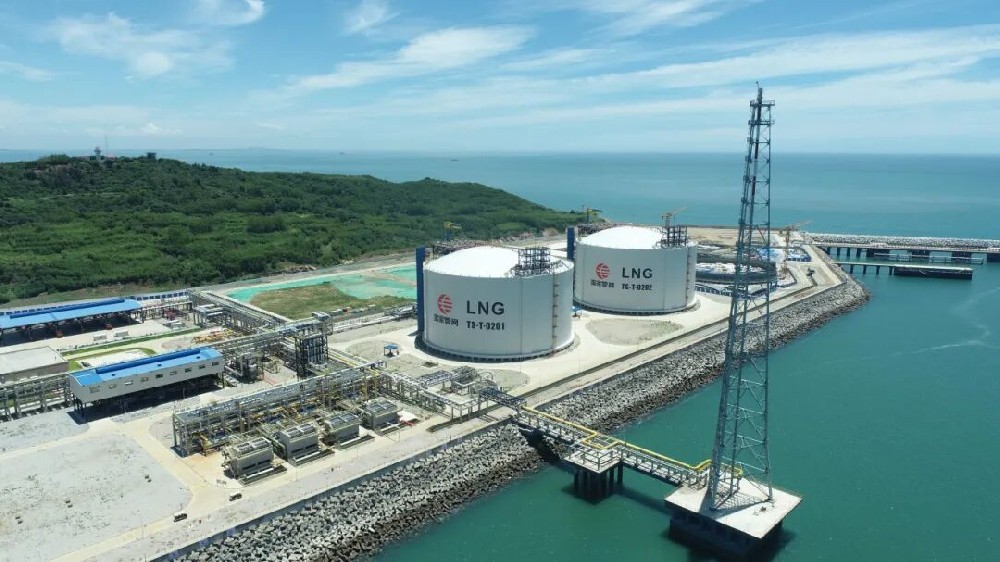
| Item | Details |
|---|---|
| Project Name | Beihai LNG Aerogel Cryogenic Insulation Evaluation Project |
| Facility Type | LNG Receiving Terminal |
| Location | Beihai, Guangxi, China |
| Application Area | ORV Inlet Pipelines |
| Operating Conditions | LNG Cryogenic Service |
| Pipeline Diameter | DN200 |
| Number of ORV Lines | 7 |
| Length per Line | Approximately 50 m |
| Total Demonstration Length | Approximately 350 m |
| Monitoring System | Continuous Temperature Monitoring |
| Monitoring Points | 12 Sensors |
Project information is based on publicly available procurement and implementation documentation.
Prior to the demonstration program, the ORV inlet pipelines utilized a combination of:
Diene elastomer foam insulation
Nitrile rubber foam insulation
The existing cryogenic insulation thicknesses were:
75 mm
100 mm
The objective of the demonstration project was to evaluate alternative aerogel-based insulation configurations and compare their performance in terms of thermal efficiency, durability, structural adaptability, safety, and economic feasibility.
The project involved four major phases:
Cryogenic insulation system design
Thermal-performance simulation
On-site installation
Application-performance evaluation
Project requirements specified the development of multiple aerogel-based cryogenic insulation concepts, including hybrid solutions combining aerogel materials with other cryogenic insulation systems.
Each design was evaluated for:
Thermal performance
Durability
Structural adaptability
Fire safety
Economic viability
The demonstration covered all seven ORV inlet pipeline sections included in the project scope.
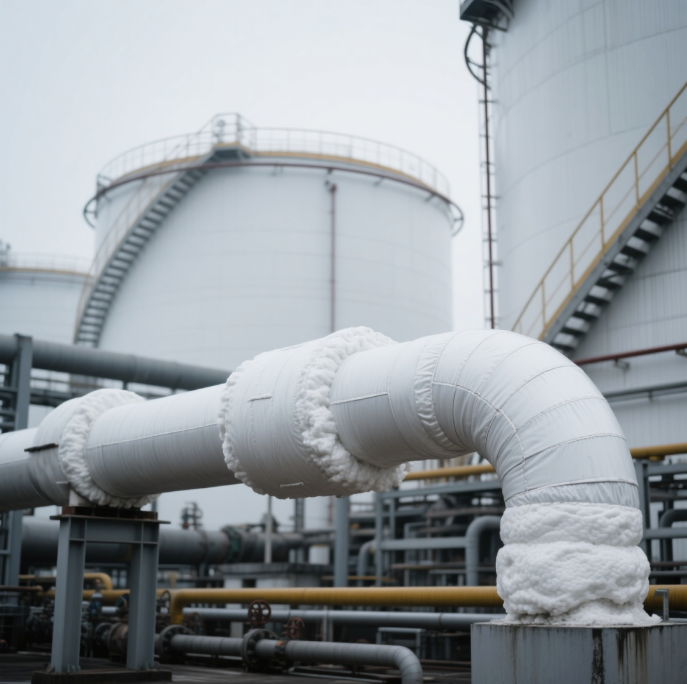
To evaluate cryogenic insulation performance under actual LNG operating conditions, a dedicated monitoring system was established.
The monitoring program included:
Internal temperature measurements
External temperature measurements
Continuous operational monitoring
Cold-loss assessment support
Comparative insulation-performance evaluation
A total of 12 temperature sensors were installed throughout the insulation structure to collect thermal performance data during operation.
The project successfully completed:
Cryogenic insulation design activities
Thermal simulation and modelling
Field installation and implementation
Continuous temperature monitoring
Operational data collection
Cryogenic insulation performance evaluation
Although detailed monitoring results have not been publicly released, the project successfully established a field-validation framework that can support future insulation system optimization for LNG receiving terminals.
Aerogel insulation demonstration successfully completed on 7 ORV inlet pipeline sections.
Approximately 350 m of cryogenic pipeline included in the evaluation scope.
Twelve monitoring locations deployed for continuous temperature collection.
Multiple cryogenic insulation configurations evaluated under real LNG operating conditions.
Performance data generated to support future LNG insulation studies.
This project demonstrates how aerogel insulation technology can be evaluated in a real LNG receiving terminal environment. It provides a field-validated reference for future cryogenic insulation projects, particularly for ORV inlet pipelines and other critical cold-service applications.
The LNG industry is increasingly focused on:
Long-term insulation reliability
Cold-loss reduction
Moisture resistance
Lifecycle cost optimization
Performance-based engineering
The demonstration also provides a valuable engineering reference for future LNG receiving terminals, LNG transfer pipelines, cryogenic processing facilities, and other low-temperature infrastructure projects.
The project was initiated to investigate advanced insulation technologies capable of addressing cold leakage, moisture intrusion, frost formation, and long-term cryogenic insulation performance challenges.
The demonstration focused on ORV inlet cryogenic pipelines within the LNG receiving terminal.
The project covered seven ORV pipeline sections with an estimated total evaluation length of approximately 350 m.
A continuous monitoring system with 12 temperature sensors was installed across the insulation structure to support thermal-performance assessment.
Publicly available information confirms completion of the monitoring and evaluation program. Detailed temperature measurements and cold-loss calculations have not been publicly disclosed. However, the project established a field-monitoring framework and generated operational data to support future LNG insulation evaluations.
Airgeltech supplies aerogel insulation materials for LNG receiving terminals, transfer pipelines, cryogenic processing facilities, industrial gas plants, cryogenic valves and flanges, and low-temperature energy infrastructure.
Disclaimer: This case study is based entirely on publicly available information relating to an insulation demonstration project conducted at Beihai LNG Receiving Terminal. The article is presented solely for technical discussion, industry learning, and engineering reference purposes. Airgeltech did not participate in the project design, material supply, installation, testing, monitoring, or performance verification activities associated with the referenced project. Information included in this article is derived from publicly available procurement notices and implementation reports.