Rethinking Thermal Insulation Coating Design with Hollow Glass Microspheres
A functional filler strategy for lightweight and high-efficiency thermal insulation coating formulations.
Executive Summary
The development of thermal insulation coatings has traditionally focused on chemical formulation, binder selection, and coating thickness. However, as coating manufacturers pursue lighter, more efficient, and higher-performing systems, material architecture is becoming an increasingly important part of formulation design.
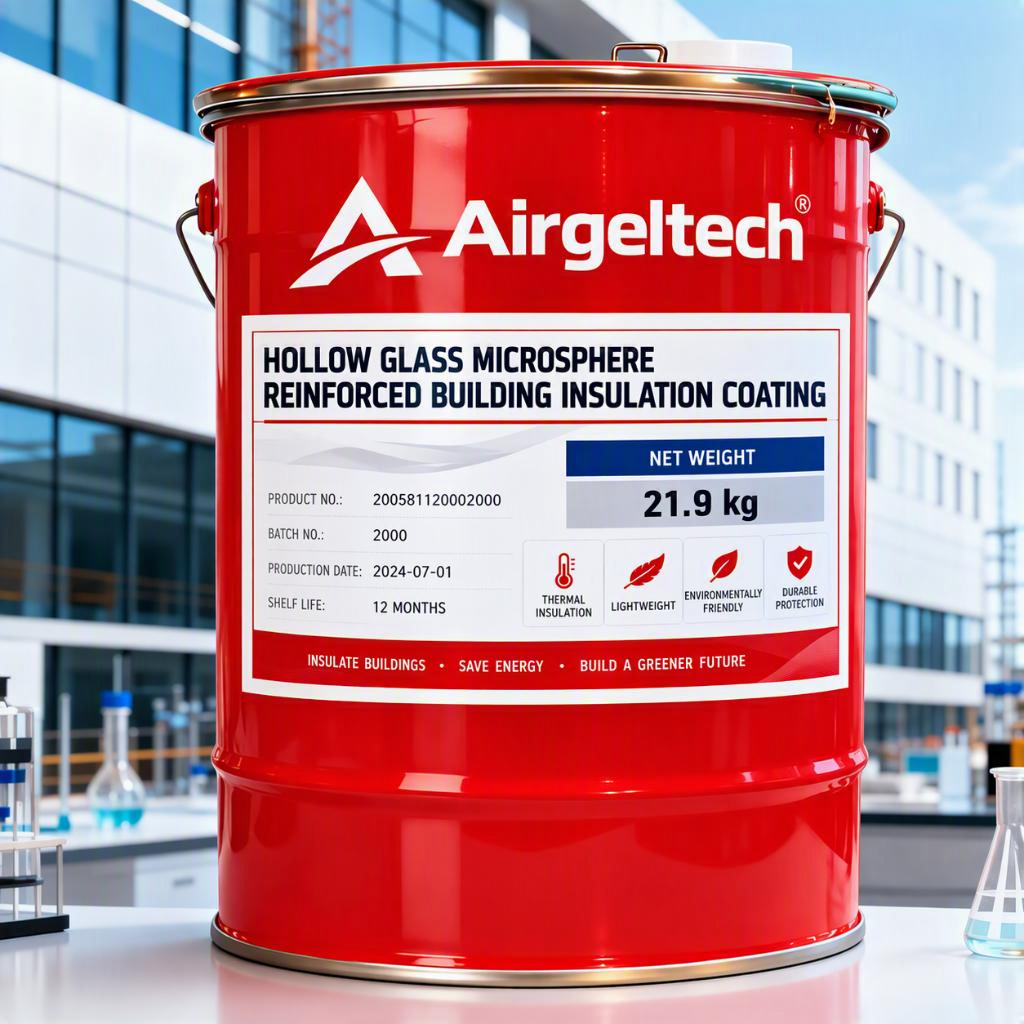
This project explored the use of Airgeltech Hollow Glass Microspheres as a functional filler within a thermal insulation coating formulation designed for building envelope applications. Rather than serving solely as a lightweight extender, the microspheres contributed to multiple formulation objectives, including density reduction, coating structure optimization, application efficiency, and thermal insulation functionality.
The project demonstrates how particle engineering can support formulation efficiency in thermal insulation coating systems.
Why Thermal Insulation Coatings Continue to Evolve
Modern thermal insulation coatings are expected to do more than provide decorative protection. Today's systems are increasingly required to contribute to:
Support energy-efficiency objectives
Contribute to building energy performance targets.
Surface thermal management
Control heat transfer through building envelopes effectively.
Lightweight construction
Enable retrofits and lightweight structures without structural burden.
Simplified installation
Reduce complexity, layers, and application time.
Outdoor service requirements
Formulations intended for exterior use must be designed and tested for the relevant exposure conditions.
Material utilization
Improve material utilization within lightweight coating designs.
At the same time, formulators face growing pressure to improve performance without increasing system weight, coating thickness, or manufacturing complexity. These requirements are changing the way thermal insulation coating formulations are designed.
The Challenge: Improving Performance Without Adding More Material
Many conventional approaches to thermal insulation coating development rely on increasing material loading or introducing larger quantities of fillers and additives. While these methods may improve specific properties, they often introduce new challenges:
Increased coating density
Higher weight and material consumption.
Reduced application efficiency
More difficult processing and handling.
Lower formulation efficiency
Reduced volume efficiency per unit weight.
Limited formulation flexibility
Trade-offs between properties restrict design freedom.
Material Selection Strategy: Why Hollow Glass Microspheres?
The answer centered on hollow glass microsphere technology for lightweight fillers and composites. Unlike traditional mineral fillers, hollow glass microspheres contain microscopic gas-filled cavities enclosed within a thin-walled glass shell. This structure creates a unique combination of characteristics:
Low particle density
Lower density compared with many conventional mineral fillers.
High volume efficiency
Maximizes volume per unit weight.
Hollow internal architecture
Can support lower formulation density and contribute to thermal resistance when appropriately selected and incorporated.
Good dimensional stability
Maintains performance under varying conditions.
Broad formulation compatibility
Integrates well into existing coating manufacturing processes.
"More importantly, these characteristics originate from particle design rather than chemical composition alone." This distinction is significant. It means the material can contribute value not merely because of what it is made of, but because of how it is engineered.
A Different Way to Think About Thermal Insulation Coatings
In many coating systems, fillers are viewed primarily as materials that occupy space. Hollow glass microspheres challenge that assumption. By introducing millions of microscopic hollow structures throughout the coating matrix, they influence the overall architecture of the system. As a result, their contribution extends beyond density reduction.
When incorporated into a thermal insulation coating formulation, hollow glass microspheres may influence:
Coating structure development
Particle packing behavior
Flow and leveling characteristics
Application consistency
Volume efficiency
Thermal management performance
This multifunctional role was a key reason they were selected for the project.
Solution Development
Airgeltech Hollow Glass Microspheres were incorporated into the thermal insulation coating formulation as a functional filler. The objective was not simply to create a lighter coating, but to develop a formulation capable of balancing multiple performance requirements simultaneously.
The selected microspheres were incorporated through conventional production methods and dispersed throughout the coating matrix under the project formulation and processing conditions.
The resulting formulation demonstrated good processability, coating consistency, and application characteristics throughout development and field implementation.
Project Implementation
Surface Preparation
The substrate was cleaned and prepared according to standard coating application procedures to ensure proper adhesion and long-term system integrity.
Coating Application
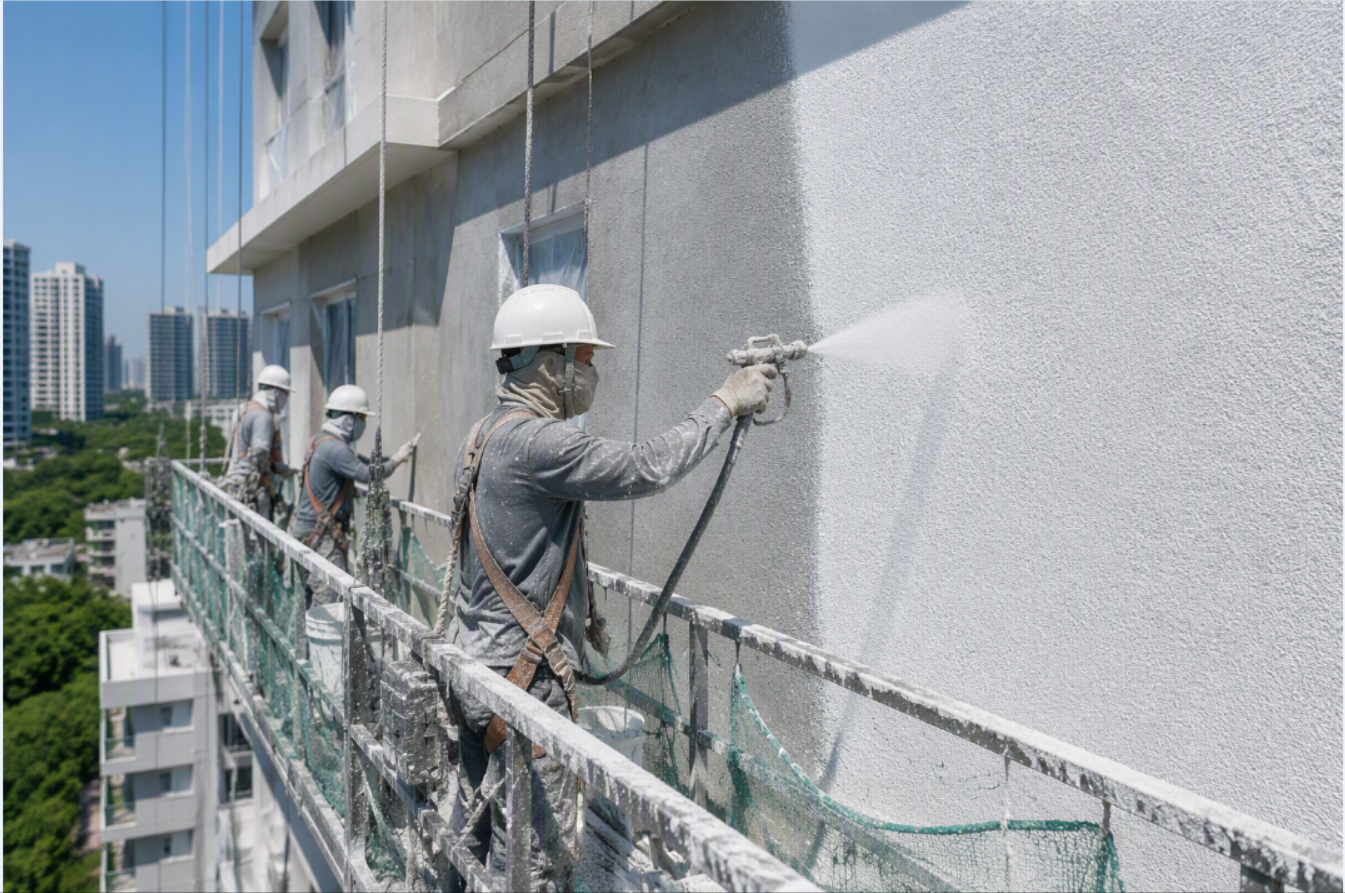
The hollow glass microsphere-enhanced thermal insulation coating was applied using conventional application techniques. During installation, the formulation maintained stable handling characteristics and demonstrated good flow, leveling, and coverage performance.
System Completion
Following curing, a continuous and uniform insulation coating layer was formed across the application area. The completed system met the intended formulation objectives while maintaining practical installation efficiency.
Project Observations
The following observations are based on the field implementation and are presented as practical findings from this project.
Integration with conventional coating production methods
Application using standard coating techniques
Continuous coverage across the treated surface
Practical handling during field application
Uniform visible appearance after curing
Successful completion of the coating application
Beyond these practical observations, the project also illustrated the broader formulation value of using hollow glass microspheres as a lightweight functional filler.

Engineering Perspective: The Value of Particle Architecture
One of the most important observations from this project is that thermal insulation performance is not determined solely by chemistry. Particle architecture also matters.
The hollow internal structure of the microspheres allows functionality to be introduced through engineered geometry rather than increased material loading. This approach provides formulators with an additional design tool when balancing performance requirements within complex coating systems.
Rather than asking how much material should be added, formulators can begin asking how material structure can be optimized. This shift represents a meaningful change in the way advanced coating systems are developed.
What This Means for Coating Manufacturers
For coating manufacturers, hollow glass microspheres provide a formulation strategy rather than simply another filler option.
By contributing volume, lowering density, and supporting thermal management objectives simultaneously, they can help formulators achieve a better balance between performance, processability, and material efficiency.
This approach is particularly valuable in building insulation coatings, reflective coatings, roof coatings, and other systems where both weight reduction and thermal performance are desired.
For coating producers, insulation coating development rarely involves optimizing a single property. Successful products must balance:
Thermal performance
Density
Application efficiency
Manufacturing practicality
Material utilization
Long-term stability
The project demonstrates that hollow glass microspheres can contribute to several of these objectives simultaneously — improving formulation efficiency while supporting lightweight, multifunctional, and performance-driven coating technologies.
Looking Ahead
As coating formulations become more sophisticated, manufacturers are increasingly seeking materials that contribute functionality rather than simply occupy volume. This trend is driving greater interest in engineered fillers such as hollow glass microspheres.
Their combination of low density, engineered internal structure, and formulation flexibility creates new opportunities for the development of advanced coating systems across building, industrial, and infrastructure applications.
Conclusion
This project demonstrates that hollow glass microspheres should not be viewed merely as lightweight fillers. They represent a material design strategy for improving formulation efficiency in thermal insulation coating systems.
By combining lightweight construction, thermal insulation functionality, formulation efficiency, and application performance within a single engineered particle, hollow glass microspheres provide coating manufacturers with new possibilities for product development.
The project confirms that intelligently engineered filler technologies can play a significant role in shaping the next generation of thermal insulation coatings.
Frequently Asked Questions
Material Used in This Project
Airgeltech Hollow Glass Microspheres
Engineered for thermal insulation coating formulations requiring lightweight construction, formulation flexibility, and enhanced volume efficiency.
Available in multiple grades to support different density, strength, and processing requirements.