As cold-chain logistics infrastructure continues to expand, facility owners face growing pressure to improve fire safety, reduce energy consumption, enhance operational reliability, and extend asset life.
To address these challenges, a large agricultural and food cold-chain logistics facility in Hubei Province, China launched a research and application program focused on high-performance aerogel insulation technology. The project introduced an aerogel-based internal insulation system, combining advanced thermal simulation, prefabricated construction methods, and non-combustible insulation materials.
The result was a next-generation cold-storage solution capable of achieving a lower operating temperature, enhanced fire protection, improved installation efficiency, and long-term thermal performance.
Large Agricultural & Food Cold Chain Logistics Facility
Located in Hubei Province, China
EPC Project Delivery Model
Design Temperature Improved from -4°C to -15°C
Aerogel Composite Insulation System Adopted
Thermal Conductivity ≤ 0.021 W/(m·K)
A1 Non-Combustible Fire Rating
Factory-Prefabricated Installation System
7 Patent Applications Submitted
1 Software Copyright Obtained
Cold-storage facilities are critical components of modern food distribution, agricultural processing, pharmaceutical logistics, and cold-chain transportation networks.
However, conventional insulation systems frequently present several challenges:
Fire safety concerns
High refrigeration energy consumption
Moisture-related deterioration
Long construction schedules
Rising maintenance costs
Industry experience has shown that combustible insulation materials may create significant risks when exposed to installation defects, aging, or abnormal operating conditions.
To explore safer and more efficient alternatives, the project team initiated a research and demonstration program focused on advanced aerogel insulation technologies for cold-storage environments.
| Item | Details |
|---|---|
| Project Type | Agricultural & Food Cold Chain Logistics Facility |
| Location | Hubei Province, China |
| Delivery Model | EPC |
| Application Area | No.1 Ice Storage Room |
| Primary Objective | Improve Fire Safety and Thermal Efficiency |
| Insulation Technology | Aerogel Composite Insulation System |
| Construction Method | Factory-Prefabricated Installation |
| Innovation Output | 7 Patent Applications + 1 Software Copyright |
Traditional cold-storage facilities frequently rely on organic insulation materials that can introduce fire-performance concerns.
Improving insulation fire resistance became one of the primary design objectives of the project.
Cold-storage environments operate continuously and consume substantial refrigeration energy.
Reducing heat gain through walls, ceilings, and flooring directly influences operating efficiency and long-term energy costs.
Conventional insulation systems often require extensive on-site labor and installation procedures.
The project sought to improve construction efficiency while maintaining insulation quality and system reliability.
Cold-storage infrastructure must perform reliably for many years under:
Low-temperature conditions
Moisture exposure
Thermal cycling
Continuous operation
The insulation system therefore required excellent durability, moisture resistance, and long-term thermal stability.
To address these challenges, the project team developed an integrated insulation solution combining:
Metal-faced aerogel composite insulation panels
Digital thermal-design tools
Prefabricated installation technologies
The objective was not only to improve thermal performance but also to enhance safety, durability, and construction efficiency.
A dedicated thermal simulation platform was developed specifically for cold-storage insulation design.
The platform was used to:
Calculate insulation thickness requirements
Simulate thermal performance
Optimize insulation system design
Evaluate expected operating behavior
This allowed insulation configurations to be optimized before construction began.
The project incorporated aerogel insulation materials developed for low-temperature applications.
| Property | Performance |
|---|---|
| Thermal Conductivity | ≤ 0.021 W/(m·K) |
| Fire Rating | A1 Non-Combustible |
| Moisture Resistance | Excellent |
| Low-Temperature Stability | Excellent |
| Aging Resistance | Enhanced |
The combination of low thermal conductivity and non-combustible performance provided significant advantages compared with conventional insulation systems.
A new aerogel composite panel system was developed for the project.
The system was designed to provide:
Enhanced thermal insulation
High fire resistance
Structural stability
Installation efficiency
Independent testing confirmed performance related to:
Bending strength
Adhesion strength
Impact resistance
Dimensional stability
Environmental performance
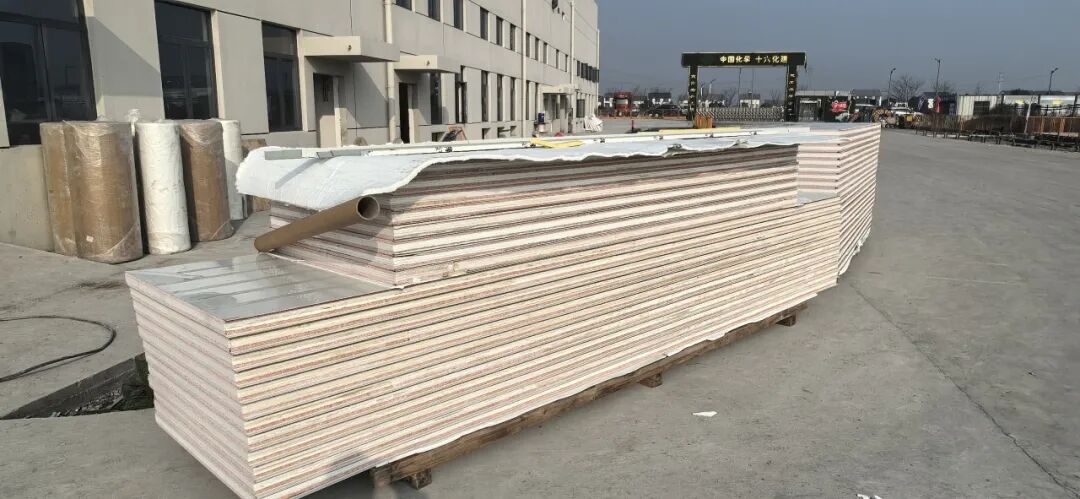
One of the major innovations of the project was the adoption of factory-prefabricated insulation construction.
Instead of relying entirely on traditional site-built insulation methods, insulation components were manufactured in a controlled factory environment and transported to the project site for assembly.
Reduced on-site labor
Improved installation consistency
Faster project delivery
Lower installation risks
Better quality control
Improved construction efficiency
| Parameter | Original Design | Optimized Design |
|---|---|---|
| Storage Temperature | -4°C | -15°C |
| Fire Performance | Conventional System | A1 Non-Combustible System |
| Insulation Technology | Traditional Insulation | Aerogel Composite Insulation |
| Construction Method | Conventional Installation | Factory-Prefabricated Installation |
| Innovation Output | Standard Design | 7 Patents + 1 Software Copyright |
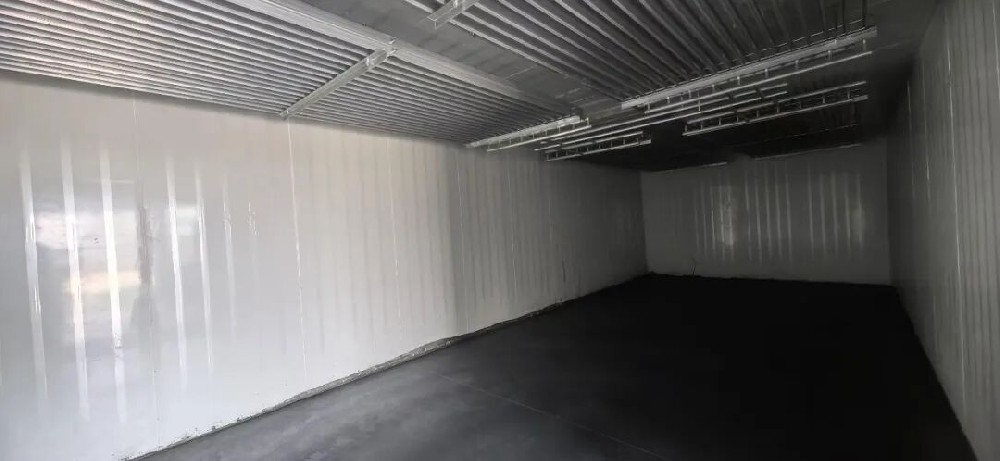
One of the most significant outcomes was the enhancement of the operating temperature.
Original Design: -4°C
Optimized Design: -15°C
The upgrade significantly improved the facility's low-temperature storage capability and refrigeration performance.
The aerogel-based insulation solution achieved:
A1 Non-Combustible Classification
This represents one of the highest levels of fire performance available for building insulation materials and provides a substantial improvement over conventional combustible insulation systems.
The insulation system incorporated materials with thermal conductivity values of:
≤ 0.021 W/(m·K)
The low thermal conductivity helps minimize heat transfer through the building envelope and supports improved refrigeration efficiency.
The project generated substantial innovation outputs, including:
7 patent applications
1 software copyright registration
These achievements demonstrate the project's contribution to advanced cold-storage insulation technology.
The project demonstrated several practical advantages associated with aerogel-based insulation systems.
Reduced heat transfer supports more efficient refrigeration operation.
A1-rated insulation materials significantly improve facility safety.
Advanced insulation materials help resist moisture-related deterioration.
The system was designed to provide enhanced durability under demanding cold-storage conditions.
Factory-prefabricated installation reduced construction complexity and improved delivery efficiency.
Improved thermal performance and durability support long-term operational value.
Storage temperature improved from -4°C to -15°C
Thermal conductivity achieved ≤ 0.021 W/(m·K)
A1 non-combustible fire performance achieved
Factory-prefabricated construction successfully implemented
Seven patent applications and one software copyright generated
Demonstrated the viability of aerogel insulation technology in large-scale cold-chain infrastructure
Cold-chain operators worldwide are increasingly seeking insulation systems capable of delivering:
Improved energy efficiency
Higher fire safety standards
Longer service life
Better moisture resistance
Faster project delivery
Lower lifecycle costs
This project demonstrates how aerogel insulation technology can help address these requirements and provides a valuable industry reference for future cold-storage construction.
The case also highlights the transition of aerogel materials from specialized industrial applications into mainstream cold-chain infrastructure.
Airgeltech supplies aerogel insulation solutions for:
Refrigerated warehouses
Pharmaceutical cold storage
Industrial refrigeration systems
Available support includes:
Product Samples
Material Selection Support
Application Guidance
This case study is based on publicly reported information regarding a cold-storage insulation project in China and is provided for industry reference and technical discussion purposes only. Airgeltech was not involved in the design, material supply, installation, testing, or construction activities associated with the referenced project. The case is presented solely to illustrate industry adoption trends and engineering applications of aerogel insulation technology.